It’s Time To Talk About Museums’ Unethical Collection Of Indigenous And Black Human Remains
Share
Explore Our Galleries


Breaking News!
Today's news and culture by Black and other reporters in the Black and mainstream media.
Ways to Support ABHM?
By Sage Howard, Huffington Post
The first Black president of the American Museum of Natural History is pulling a large portion of “artifacts” from display.
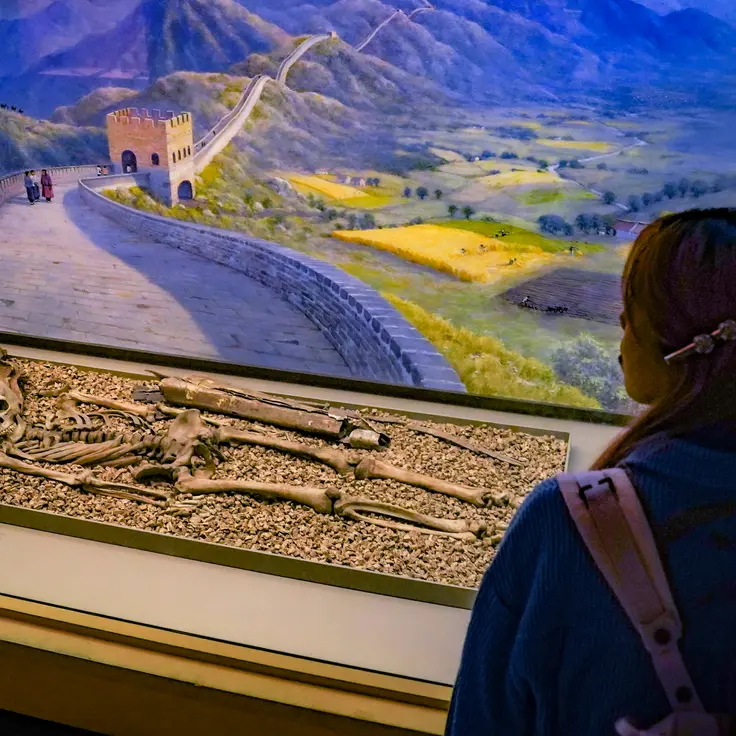
At [the] height of spooky season, nothing feels more horrifying ― or more disrespectful ― than human remains that have been on display to the public for decades without the consent of any relevant parties.
New York’s American Museum of Natural History, world-renowned for its comprehensive collections of cultural relics, recently lifted the veil on the troubling origins of some of its artifacts. In a letter to staff, Sean Decatur, the museum’s new president, explained that many of the human remains on display and in their collection were sourced in racist and violent ways.
“We must acknowledge that, with the small exception of those who bequeathed their bodies to medical schools for continued study, no individual consented to have their remains included in a museum collection,” Decatur, who is the museum’s first Black president, wrote in the Oct. 12 letter.
[…]
The museum plans to remove unethically obtained human remains from displays and place them in storage, with the intention of learning more about the origins of its collection and returning all unethically sourced remains to their descendants. “We have to acknowledge that whose remains came into museums were largely from groups that were marginalized or exploited economically and socially, politically,” Decatur told NPR.
Read about the steps AMNH’s already taken to achieve repatriation in the original article.
This endeavor marks an important shift in ensuring exploited bodies find freedom at last.
Discover more history in the making.
Comments Are Welcome
Note: We moderate submissions in order to create a space for meaningful dialogue, a space where museum visitors – adults and youth –– can exchange informed, thoughtful, and relevant comments that add value to our exhibits.
Racial slurs, personal attacks, obscenity, profanity, and SHOUTING do not meet the above standard. Such comments are posted in the exhibit Hateful Speech. Commercial promotions, impersonations, and incoherent comments likewise fail to meet our goals, so will not be posted. Submissions longer than 120 words will be shortened.
See our full Comments Policy here.