Black Lives Matter
Explore Our Online Exhibits
Breaking News
Worldwide Community Events
Week 4
- Sun 27
- Mon 28
- Tue 29
- Wed 30
- Thu 1
- Fri 2
- Sat 3
- Sun 4
- Mon 5
- Tue 6
- Wed 7
- Thu 8
- Fri 9
- Sat 10
- Sun 11
- Mon 12
- Tue 13
- Wed 14
- Thu 15
- Fri 16
- Sat 17
- Sun 18
- Mon 19
- Tue 20
- Wed 21
- Thu 22
- Fri 23
- Sat 24
- Sun 25
- Mon 26
- Tue 27
- Wed 28
- Thu 29
- Fri 30
- Sat 31
-
27September
-
28September
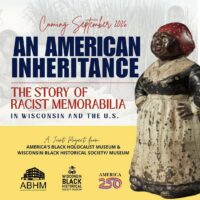
An American Inheritance: The Story of Racist Memorabilia
Wisconsin Black Historical Society in MKE28September -
29September
An American Inheritance: The Story of Racist Memorabilia
Wisconsin Black Historical Society in MKE29September -
30September
An American Inheritance: The Story of Racist Memorabilia
Wisconsin Black Historical Society in MKE30September -
01October
An American Inheritance: The Story of Racist Memorabilia
Wisconsin Black Historical Society in MKE01October -
02October
An American Inheritance: The Story of Racist Memorabilia
Wisconsin Black Historical Society in MKE02October -
03October
An American Inheritance: The Story of Racist Memorabilia
Wisconsin Black Historical Society in MKE03October03October 9:00 AM - 4:00 PM
18th Annual Black Women’s Wellness Day
Monona Terrace Community & Convention Center -
04October
An American Inheritance: The Story of Racist Memorabilia
Wisconsin Black Historical Society in MKE04October -
05October
An American Inheritance: The Story of Racist Memorabilia
Wisconsin Black Historical Society in MKE05October -
06October
An American Inheritance: The Story of Racist Memorabilia
Wisconsin Black Historical Society in MKE06October -
07October
An American Inheritance: The Story of Racist Memorabilia
Wisconsin Black Historical Society in MKE07October -
08October
An American Inheritance: The Story of Racist Memorabilia
Wisconsin Black Historical Society in MKE08October08October
Silicon Valley African Film Festival 2026
The Historic Hoover Theatre, San Jose -
09October
An American Inheritance: The Story of Racist Memorabilia
Wisconsin Black Historical Society in MKE09October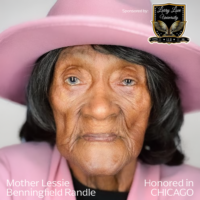
Mother Lessie Benningfield Randle Comes to Chicago
Obama Presidential Center09October09OctoberSilicon Valley African Film Festival 2026
The Historic Hoover Theatre, San Jose -
10October
An American Inheritance: The Story of Racist Memorabilia
Wisconsin Black Historical Society in MKE10OctoberMother Lessie Benningfield Randle Comes to Chicago
Obama Presidential Center10October10OctoberSilicon Valley African Film Festival 2026
The Historic Hoover Theatre, San Jose -
11October
An American Inheritance: The Story of Racist Memorabilia
Wisconsin Black Historical Society in MKE11OctoberMother Lessie Benningfield Randle Comes to Chicago
Obama Presidential Center11October11OctoberSilicon Valley African Film Festival 2026
The Historic Hoover Theatre, San Jose -
12October
An American Inheritance: The Story of Racist Memorabilia
Wisconsin Black Historical Society in MKE12October -
13October
An American Inheritance: The Story of Racist Memorabilia
Wisconsin Black Historical Society in MKE13October -
14October
An American Inheritance: The Story of Racist Memorabilia
Wisconsin Black Historical Society in MKE14October -
15October
An American Inheritance: The Story of Racist Memorabilia
Wisconsin Black Historical Society in MKE15October15October
Black Travel Summit 2026
Baird Center, Milwaukee -
16October
An American Inheritance: The Story of Racist Memorabilia
Wisconsin Black Historical Society in MKE16October16OctoberBlack Travel Summit 2026
Baird Center, Milwaukee -
17October
An American Inheritance: The Story of Racist Memorabilia
Wisconsin Black Historical Society in MKE17October17OctoberBlack Travel Summit 2026
Baird Center, Milwaukee -
18October
An American Inheritance: The Story of Racist Memorabilia
Wisconsin Black Historical Society in MKE18October18OctoberBlack Travel Summit 2026
Baird Center, Milwaukee -
19October
An American Inheritance: The Story of Racist Memorabilia
Wisconsin Black Historical Society in MKE19October -
20October
An American Inheritance: The Story of Racist Memorabilia
Wisconsin Black Historical Society in MKE20October -
21October
An American Inheritance: The Story of Racist Memorabilia
Wisconsin Black Historical Society in MKE21October -
22October
An American Inheritance: The Story of Racist Memorabilia
Wisconsin Black Historical Society in MKE22October -
23October
An American Inheritance: The Story of Racist Memorabilia
Wisconsin Black Historical Society in MKE23October23October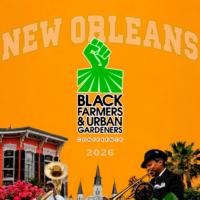
14th Annual Black Farmers and Urban Gardeners National Conference
Dillard University -
24October
An American Inheritance: The Story of Racist Memorabilia
Wisconsin Black Historical Society in MKE24October24October14th Annual Black Farmers and Urban Gardeners National Conference
Dillard University24October
-
25October
An American Inheritance: The Story of Racist Memorabilia
Wisconsin Black Historical Society in MKE25October25October14th Annual Black Farmers and Urban Gardeners National Conference
Dillard University -
26October
An American Inheritance: The Story of Racist Memorabilia
Wisconsin Black Historical Society in MKE26October -
27October
An American Inheritance: The Story of Racist Memorabilia
Wisconsin Black Historical Society in MKE27October -
28October
An American Inheritance: The Story of Racist Memorabilia
Wisconsin Black Historical Society in MKE28October -
29October
An American Inheritance: The Story of Racist Memorabilia
Wisconsin Black Historical Society in MKE29October -
30October
An American Inheritance: The Story of Racist Memorabilia
Wisconsin Black Historical Society in MKE30October -
31October
An American Inheritance: The Story of Racist Memorabilia
Wisconsin Black Historical Society in MKE31October31October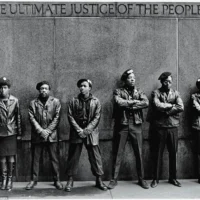
Share
Black Lives Matter, sometimes shortened to “BLM,” is an anti-racist movement that highlights racism and the disparities that evolve from racism, including police brutality and other anti-Black violence. Black Lives Matter gained popularity online after the murder of George Floyd by a Minneapolis police officer was recorded and shared by a bystander. In response to the video, which shows officer Derek Chauvin kneeling on Floyd’s neck for 8 minutes and 46 seconds, protests erupted around the world. These protests were often met with police violence, some of which has been declared illegal while protestors have been falsely arrested.
The momentum continued to draw attention to police violence, both as more Black lives were taken and as previous stories came to light. Trayvon Martin, Michael Brown, Eric Garner, and Breonna Taylor are also victims who the movement has recognized. Thanks to the attention given to these cases, some of the perpetrators have finally faced justice, including Derek Chauvin, who has been convicted with murder.
BLM also encouraged police reform and greater investigations into policing, with some activists calling for reparations or to defund the police and reroute funds to other social programs that may be more effective. The movement has further brought attention to international conflict and raised funds during the COVID-19 pandemic. In some ways, the movement reflects the previous Civil Rights Movement, which lasted through the 1960s to 1980s including the Black Panther Party, which provided community assistance. Because of this, the movement has been recognized for its historical significance.
However, the movement has come under fire for protests that turned violent, for focusing too much on Black men, and for mismanaging funds raised.
A nonprofit organization, The Black Lives Matter Global Network Foundation, also exists. Some people may refer to it as simply “Black Lives Matter.”
See all of our Black Lives Matter content below, starting with the most recent.
By YAMICHE ALCINDOR, New York Times In the past week alone, there was the 4-year-old girl in Falcon Heights, Minn., who was captured on video consoling her mother after they watched a police officer shoot the mother’s boyfriend through the window of a car. And there was the 15-year-old boy in Baton Rouge, La., who sobbed uncontrollably in front of television cameras after the similar shooting death of his father. Then there were the four brothers, ages 12 to 17, whose mother was shot by the sniper who opened fire on officers in Dallas on Thursday night while the family was protesting police violence against blacks. The mother, who survived, threw herself atop one boy, as the others ran for their lives. Again and again, children are finding themselves enmeshed in the country’s roiling debate over police treatment of African-Americans. The close-up views of violence, obviously traumatizing, are giving rise to a generation of young people who distrust authority, grow up well before their time and suffer nightmares that seem too real. “As a mother, I have now been forced to raise a son who is going to remember what happened to his father,” said Quinyetta McMillon, the mother of the boy in Louisiana who sobbed over the death of his father, Alton Sterling. “That I can’t take away from him.” While adults around them protest and demand criminal justice reform, young witnesses of the carnage are reeling from their losses and harboring pent-up depression that often comes pouring out in panic attacks and breakdowns, relatives say. The list of young people burdened by these tumultuous times includes Tamir Rice’s teenage sister, who lost 50 pounds after watching the police shoot him in 2014; the daughter of Oscar Grant III, killed by a transit officer while lying down on a California train platform in 2009, who as a 5-year-old would ask playmates to duck when she saw the police; and the 9-year-old nephew of Sandra Bland, who began sleeping in his mother’s room after Ms. Bland’s death last year in a jail cell. “They are aware of what’s going in the world, of how you can leave your house and you can very well end up in a body bag,” said a sister of Ms. Bland’s, Shante Needham, whose four children continue to struggle with the death of their aunt. “They watch the news. They see all the stuff going on on Facebook. And it’s sad that kids even have to think like that, that if I get stopped by the police, I may not make it home.”… Read the full article here. More Breaking News here.
A new study has found that the race of the person being stopped by police officers is significant in terms of how much force is used. The study of thousands of use-of-force episodes from police departments across the nation has concluded what many people have long thought, but which could not be proved because of a lack of data: African-Americans are far more likely than whites and other groups to be the victims of use of force by the police, even when racial disparities in crime are taken into account.

Judge Vonda Evans: “You were so into your bravado that you forgot the eye of justice was recording you,”
Sgt. Jeffrey Rothecker is very, very sorry about a recent Facebook post advising Twin Cities residents to run over Black Lives Matter protesters.
“This can’t be the land of the free and home of the brave only for some.” By Taryn Finley, The Huffington Post Black voices should never be silenced. This was April Wells’ message in her poem “Loud Voices,” which she performed at the Get Lit Classic Slam in Southern California. The teen shunned the notion that black people are better off biting their tongues than addressing injustices. “I didn’t understand why silence was in my blood but just because my ancestors couldn’t say anything didn’t mean I wouldn’t speak up for myself,” the teen said, referencing black slaves. “They say black people are meant to be loud and that’s OK because I have something to say; this voice has the ability to move mountains.” Wells urges her audience that it’s time to speak up, mentioning Eric Garner, Michael Brown and other black people who’ve been killed by racial injustice in America. She offers using your voice as a solution. “There is no excuse to take away one more voice,” she said. “This can’t be the land of the free and home of the brave only for some.” Read the full article here. Read more Breaking News here.
Rosa Parks would believe that #BlackLivesMatter, too. By Zeba Blay, the Huffington Post Sixty years ago on this day, Rosa Parks refused to give up her seat on a Montgomery, Alabama bus and settled in to American history. We’ve seen the iconic pictures of Parks getting booked at the police station, or later staged seated on a bus looking pensively out the window. Parks has become one of the great, mythic figures of the Civil Rights era — a kind of sanctified figure who feels worlds away from the current, volatile era of social justice. But she isn’t. Today’s fight for civil rights and social justice may…seem like the very antithesis of the movement in which Parks played an integral part. In many ways, this is true. The intersection of technology, social media, and grassroots activism has produced a very different kind of struggle. The #BlackLivesMatter movement…has been criticized for being divisive (“All lives matter!“), disruptive, aimless, and even violent, in the wake of heated protests in Ferguson and…Chicago. #BlackLivesMatter protestors are considered a stark contrast to the apparent respectability of the civil rights activists of the 1960s. When we think of those protesters, we think of peaceful black people marching quietly…turning the other cheek and nobly rising above the abuse of water-hose wielding police officers and tear gas. People believe #BlackLivesMatter…will fail to replicate the successes of the Civil Rights era because its overriding message is one of frustration, not “peace and love.” But this perception of the 1960s Civil Rights era as “respectable” and #BlackLivesMatter as disruptive is far too simplistic, disregarding the nuances of both movements… In elementary school classrooms Parks has been introduced as the meek Christian woman who refused to give her bus seat up for a white rider simply because she was tired. In actuality, Parks made a calculated act of defiance, orchestrated by the Montgomery chapter of the NAACP of which she was an active and passionate member, designed to be the catalyst for what would become the Civil Rights Movement. It’s important to remember that part of why Parks was chosen to spark the bus boycott was a question of respectability — she was a seamstress and a secretary, “Somebody [we] could win with,” as chapter president E.D. Nixon explained later.. And yet, “respectability” was not the beginning and end of who Parks was. Parks was not passive, she was not meek… The incident marked the second time she had been kicked off the bus, by the same driver, in a time when these kinds of public protests were…incredibly dangerous. Parks was defiant, she was inconvenient, she was disruptive. So often, disruptiveness and defiance are mistaken for a kind of violence. Do we expect that Parks quiet, polite, “respectable,” when she refused to give up her seat, knowing that she would be arrested and harassed? Criticisms of the #BlackLivesMatter movement consistently pit it against the Civil Rights Movement. “What would Martin Luther King think,” detractors ask. “What would Rosa Parks think?” Rosa Parks would believe that black lives matter,…
From Yale to Missouri, college campuses are becoming ground zero in challenging white supremacy and institutional racism. By Peniel E. Joseph, The Root The radical spirit of the Black Lives Matter movement touched college campuses this past week in high-profile demonstrations against a culture of racism infecting higher education. The University of Missouri in Columbia…has become ground zero for black students challenging white supremacy and institutional racism. Remarkably, for 2015, they’ve been joined by members of the university’s football team, who have vowed to go on strike until the school’s president, Tim Wolfe, resigns. Wolfe has been the target of black students who have organized nonviolent actions for racial justice on campus, led by one student who is on a hunger strike to protest Wolfe’s lack of leadership after a spate of racially motivated incidents. The participation of black student-athletes has drawn national attention and is a hopeful sign of how movement-building over the past year has penetrated the consciousness of the entire African-American community as well as the wider American public… While students and athletes have united around pursuing the ouster of the university president in Missouri, at Yale University this past week, 300 African-American undergraduates demanded answers from administrators…for failing to combat a pervasive climate of racism. Black-student outrage partially stemmed from an email written by the associate master of one of Yale’s residential colleges that urged students to be open-minded about racially offensive Halloween costumes. Black students found the message tone-deaf to the almost ritualized pain they experience on campus when white students engage in stereotyping of black culture and bodies. Black women at Yale have shared stories of racial harassment that seem to illustrate a pattern of anti-black racism on the New Haven, Conn., campus. The visceral pain and outcries of black students led Salovey to admit…that the school had “failed” them… Some of these same issues confronting black students at Missouri and Yale came into sharp relief for me as I spoke at predominantly white Macalester College… Over 300 mostly black students from surrounding colleges attended the Mahmoud El-Kati Lecture, named after a distinguished retired professor of black studies, who was also in attendance. My talk, “From Civil Rights to Black Lives Matter,” touched on the way in which contemporary Black Lives Matter activists are channeling, in new, important and innovative ways, the organizing traditions of the civil rights and black power era. The enthusiasm of the young people during and after the speech was extraordinary. Black students…are hungry to understand the history of black struggle in America and globally, and how they can transform the racist culture they encounter on college campuses every day. The social-justice consciousness of the Missouri football team should be applauded, but the team’s stand against racism is part of a larger national movement that touches every institution in American society. The #BlackLivesMatter movement’s biggest impact has been in awakening the political consciousness of all Americans, especially students of color. The racial-justice movement exploding on college campuses…is the reflection of…
“It doesn’t matter what color we are, I felt that she really understand where we are coming from,” Rice’s mother said. Alana Horowitz Satlin, The Huffington Post Hillary Clinton held a private meeting in Chicago on Monday with the families of prominent victims of recent gun violence. The mothers of Trayvon Martin, Jordan Davis, Michael Brown and Tamir Rice were all present at the meeting with the former secretary of state. The women discussed racial inequality, criminal justice reform, and gun control… “She is a mother and she is a woman and I felt she understood where we were coming from,” said Samaria Rice… “It doesn’t matter what color we are, I felt that she really understand where we are coming from.” Rice’s son, Tamir, was the 12-year-old Ohio boy fatally shot by police last year for wielding what later turned out to be a BB gun. Brown, 18, was shot and killed by police officer Darren Wilson last year in Ferguson, Missouri.. In 2012, Martin, 17, was shot and killed by George Zimmerman…for appearing “suspicious.” Davis, also 17, was shot and killed after an argument…with Florida resident Michael David Dunn… Clinton has been vocally supportive of the Black Lives Matter movement for racial justice, which gained prominence following Martin’s death. “We all have a responsibility to face these hard truths about race and justice honestly and directly,” she said in a July speech. When Clinton met with Black Lives Matter activists during a campaign stop in August, she offered tips on how to best get their message across. Her outreach efforts have paid off. The former first lady and New York senator is leading with black voters in recent 2016 Democratic polls. Read the full article here. Read more Breaking News here.

Police have admitted that Jason Goolsby, who was stopped and beaten in Washington, D.C., had committed no crime.