A Family Consents to a Medical Gift, 62 Years Later
Share
Explore Our Galleries









Breaking News!
Today's news and culture by Black and other reporters in the Black and mainstream media.
Ways to Support ABHM?
By Carl Zimmer, New York Times
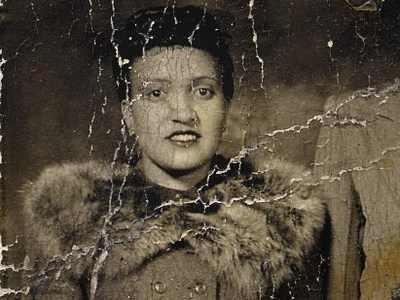
The Lacks were never compensated financially by the institutions that used the cells. Now the family will be reimbursed for expenses related to serving on the NIH working group, but will not receive pay.
“The main goal was science and being part of the conversation,” said David Lacks Jr., a grandson who will sit on the working group with Henrietta Lacks’ great-granddaughter Veronica Spencer.
Henrietta Lacks was only 31 when she died of cervical cancer in 1951 in a Baltimore hospital. Not long before her death, doctors removed some of her tumor cells. They later discovered that the cells could thrive in a lab, a feat no human cells had achieved before.
Soon the cells, called HeLa cells, were being shipped from Baltimore around the world. In the 62 years since — twice as long as Ms. Lacks’s own life — her cells have been the subject of more than 74,000 studies, many of which have yielded profound insights into cell biology, vaccines, in vitro fertilization and cancer.
But Henrietta Lacks, who was poor, black and uneducated, never consented to her cells’ being studied. For 62 years, her family has been left out of the decision-making about that research. Now, over the past four months, the National Institutes of Health has come to an agreement with the Lacks family to grant them some control over how Henrietta Lacks’s genome is used.
[…]
As the journalist Rebecca Skloot recounted in her 2010 best-seller, “The Immortal Life of Henrietta Lacks,” it was not until 1973, when a scientist called to ask for blood samples to study the genes her children had inherited from her, that Ms. Lacks’s family learned that their mother’s cells were, in effect, scattered across the planet.
Some members of the family tried to find more information. Some wanted a portion of the profits that companies were earning from research on HeLa cells. They were largely ignored for years.
Scientists at the European Molecular Biology Laboratory published the genome of a line of HeLa cells, making it publicly available for downloading. Another study, sponsored by the National Institutes of Health at the University of Washington, was about to be published in Nature. The Lacks family was made aware of neither project.
“I said, ‘No, this is not right,’ ” Jeri Lacks Whye, one of Henrietta Lacks’s grandchildren, said in an interview. “They should not have this up unless they have consent from the family.”
Read the full article here.
Learn about the HBO movie about this being made by Oprah.
Read more Breaking News here.
Comments Are Welcome
Note: We moderate submissions in order to create a space for meaningful dialogue, a space where museum visitors – adults and youth –– can exchange informed, thoughtful, and relevant comments that add value to our exhibits.
Racial slurs, personal attacks, obscenity, profanity, and SHOUTING do not meet the above standard. Such comments are posted in the exhibit Hateful Speech. Commercial promotions, impersonations, and incoherent comments likewise fail to meet our goals, so will not be posted. Submissions longer than 120 words will be shortened.
See our full Comments Policy here.