U.S. Supreme Court justices cast doubt on affirmative action in college admissions
Share
Explore Our Galleries

Breaking News!
Today's news and culture by Black and other reporters in the Black and mainstream media.
Ways to Support ABHM?
By Allison Winter, Virginia Mercury
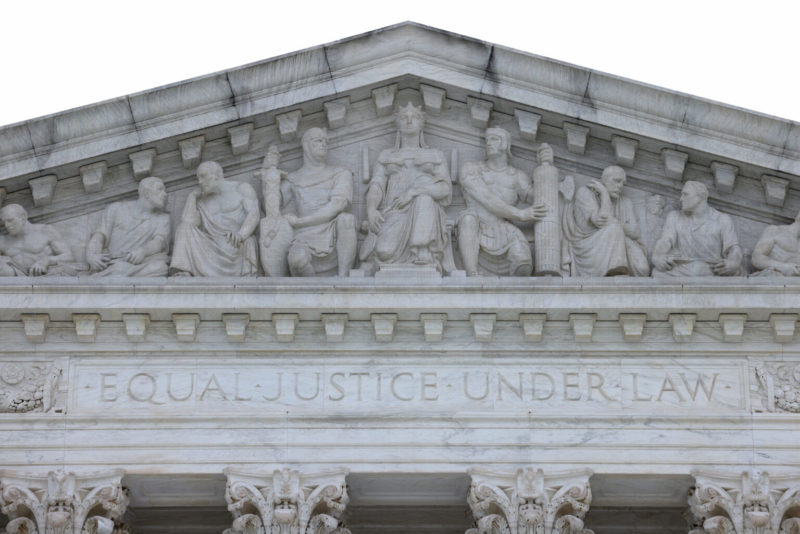
WASHINGTON — The U.S. Supreme Court’s conservative majority on Monday questioned the legality of race-conscious policies in college admissions, as the justices weighed two cases that could upend the admissions process many schools use to try to boost diversity on campus.
At issue are two cases that challenge the lawfulness of affirmative action at Harvard University, the nation’s oldest private university, and the University of North Carolina, one of its oldest public universities.
Depending on the scope of the court’s ruling, the outcome of these lawsuits could affect admissions at hundreds of colleges and universities across the country and even potentially affect broader efforts like workplace diversity programs.
The oral arguments, scheduled to last just over two-and-a-half hours, stretched for nearly six hours in one of the most controversial cases before the court this year
Members of the court’s conservative wing, who now make up a 6-3 majority of the bench, questioned if it is legal for universities to consider race and how long such policies should endure.
Justice Clarence Thomas, a conservative justice and the only Black man on the Supreme Court, asked each of the lawyers who argued in favor of UNC’s admissions process to explain how racial diversity benefits the educational experience of students.
“I didn’t go to racially diverse schools, but there were educational benefits. And I’d like you to tell me expressly when a parent sends a kid to college that they don’t necessarily send them there to have fun or feel good or anything like that. They send them there to learn physics or chemistry or whatever they’re studying,” Thomas said to Ryan Park, the attorney representing UNC. “So tell me what the educational benefits are to that?”
Park referenced studies that found diverse groups of people perform at higher levels and have less group-think, more sustained disagreement and more efficient decision-making outcomes.
Thomas sounded unmoved: ”Well, I guess I don’t put much stock in that because I’ve heard similar arguments in favor of segregation too.”
Read about the current affirmative action case.
Colleges have argued the need for affirmative action.
Follow this case on our breaking news page.
Comments Are Welcome
Note: We moderate submissions in order to create a space for meaningful dialogue, a space where museum visitors – adults and youth –– can exchange informed, thoughtful, and relevant comments that add value to our exhibits.
Racial slurs, personal attacks, obscenity, profanity, and SHOUTING do not meet the above standard. Such comments are posted in the exhibit Hateful Speech. Commercial promotions, impersonations, and incoherent comments likewise fail to meet our goals, so will not be posted. Submissions longer than 120 words will be shortened.
See our full Comments Policy here.