George Hocker broke through barriers as one of the CIA’s first Black spymasters
Share
Explore Our Galleries

Breaking News!
Today's news and culture by Black and other reporters in the Black and mainstream media.
Ways to Support ABHM?
By Dan De Luce, NBC
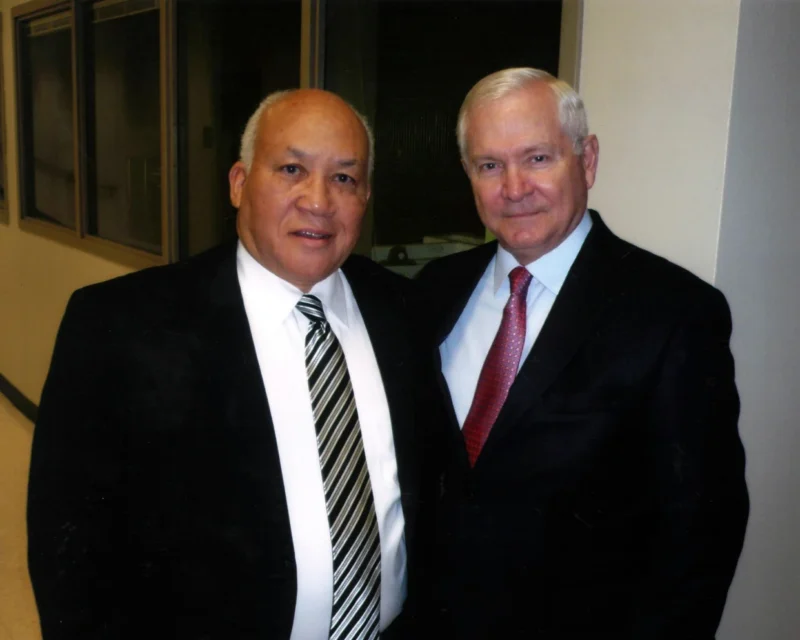
When George Hocker underwent a grueling training course to become a CIA spy, much of America was still segregated. That meant Hocker, as a Black man, could not go to restaurants in Virginia to meet with agency instructors playing the part of foreign informants.
Different exercises had to be developed for Hocker. “I had to have car meetings, whereas my classmates could go and have a nice meal in a restaurant,” he said.
Out of a class of 75, Hocker was the only Black person. He passed the course and went on to blaze a trail as one of the Central Intelligence Agency’s first Black clandestine officers, the first to open a CIA station abroad and the first to lead a branch inside the Directorate of Operations.
Hocker’s pioneering experience at the spy agency — along with a small number of other African Americans who joined in the 1960s — has been largely overlooked until recently, partly due to the secrecy that requires most CIA officers to serve in anonymity.
But the agency recently installed an exhibit dedicated to Hocker at its museum at CIA headquarters, and he is now writing a memoir, saying he wants to pass on the lessons he learned as a “Black spymaster” about resilience and determination.
NBC has more details about Hocker’s unique career.
You may not associate the CIA with Blackness, but visitors are now greeted by a Harriet Tubman statue.
Check out other breaking Black news stories.
Comments Are Welcome
Note: We moderate submissions in order to create a space for meaningful dialogue, a space where museum visitors – adults and youth –– can exchange informed, thoughtful, and relevant comments that add value to our exhibits.
Racial slurs, personal attacks, obscenity, profanity, and SHOUTING do not meet the above standard. Such comments are posted in the exhibit Hateful Speech. Commercial promotions, impersonations, and incoherent comments likewise fail to meet our goals, so will not be posted. Submissions longer than 120 words will be shortened.
See our full Comments Policy here.