On this date in American history: The “Weeping Time”
Share
Explore Our Galleries



Breaking News!
Today's news and culture by Black and other reporters in the Black and mainstream media.
Ways to Support ABHM?
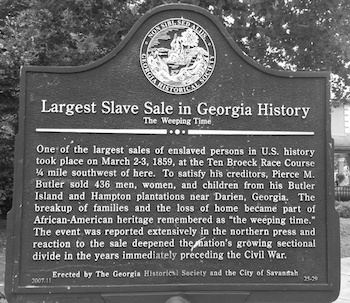
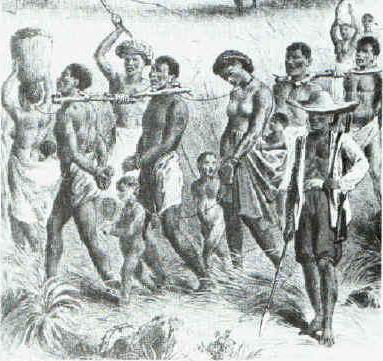
On this date in 1859, “the weeping time” of chattel slavery occurred in American history. This was the largest sale of human beings in history in the United States.
This episode took place at a racetrack in Savannah, Georgia. During the two-day auction, rain fell continuously, almost as though the heavens were crying. So, tears fell from several of the 436 men, women, and children auctioned off. The Antebellum South sale would thereafter be known as “the weeping time.” The white slave owner, Pierce Mease Butler, and his brother John had inherited the family’s Georgia plantations some twenty years earlier.
But Pierce had squandered away his portion of the inheritance, losing a rumored $700,000, and was deeply in debt. Management of Pierce Butler’s estate was transferred to trustees. The trustees sold Butler’s Philadelphia mansion for $30,000 and other Butler properties. But it was not enough to satisfy creditors or ensure that Butler would continue to live in luxury. So the Georgia plantations and their “moveable” property, their slaves, were next.
At the time, the Butler family holding included 900 slaves, divided into two groups of 450. Half would go to the estate of John, who had since died and would remain on the plantations. The fate of the other 450 Pierce’s half was more precarious, with about 20 continuing to live on the Butler property. The remainder were boarded onto railway cars and steamboats and brought to the Broeck racetrack, where each would be sold to the highest bidder.
The Weeping Time is just one example of horrific treatment experienced during three centuries of enslavement.
Comments Are Welcome
Note: We moderate submissions in order to create a space for meaningful dialogue, a space where museum visitors – adults and youth –– can exchange informed, thoughtful, and relevant comments that add value to our exhibits.
Racial slurs, personal attacks, obscenity, profanity, and SHOUTING do not meet the above standard. Such comments are posted in the exhibit Hateful Speech. Commercial promotions, impersonations, and incoherent comments likewise fail to meet our goals, so will not be posted. Submissions longer than 120 words will be shortened.
See our full Comments Policy here.