As COVID Precautions Drop, Black Americans Remain More Affected — and More Concerned
Share
Explore Our Galleries

Breaking News!
Today's news and culture by Black and other reporters in the Black and mainstream media.
Ways to Support ABHM?
By Margo Snipe, Capital B
A recent survey found Black respondents were more concerned about COVID than their white counterparts, and more likely to think the worst was yet to come.
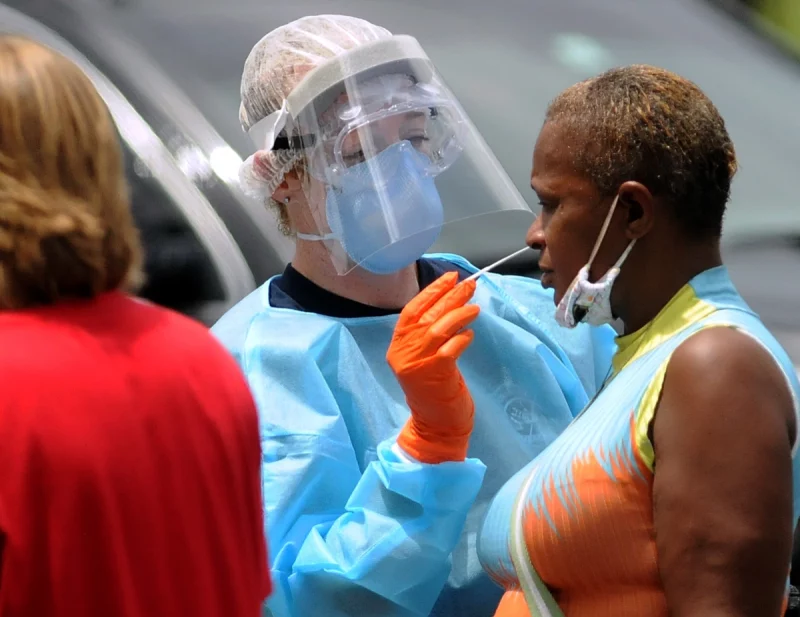
Pastor Robert Pope has been talking about COVID-19 since the virus first took hold. He talks about it at the gas station, at restaurants, and – most frequently – at his church…
As the number of cases has declined following the omicron surge, Pope sees his community feeling safer. They’re loosening up a bit too much, he said: “They’re getting way ahead of the stats.”
California recently stopped requiring masks indoors, including in schools and child care centers, as the state moves to an “endemic” approach to managing the virus. That approach is rooted in the idea that, while the virus is still present, caseloads are at a level that medical institutions can handle. It’s a shift from the crisis state of the pandemic, when hospitals were overwhelmed and testing was limited…
Pastor Pope said he’s hearing more varied opinions within his community about this phase of the pandemic and how to proceed.
“We don’t agree on everything,” he said. “Some are more cautious. Some are less cautious. Some are for masks. Some are for vaccinations.”
He understands that people are ready to get back to life as it was before the virus swept through the community and he said he sees them removing masks.
Learn about COVID-19’s unique impact on Black communities.
Unfortunately, some efforts to protect the Black community have been squashed. Concerns about COVID-19 are also joined by vaccine hesitancy.
More breaking news, including COVID-19 updates, here.
Comments Are Welcome
Note: We moderate submissions in order to create a space for meaningful dialogue, a space where museum visitors – adults and youth –– can exchange informed, thoughtful, and relevant comments that add value to our exhibits.
Racial slurs, personal attacks, obscenity, profanity, and SHOUTING do not meet the above standard. Such comments are posted in the exhibit Hateful Speech. Commercial promotions, impersonations, and incoherent comments likewise fail to meet our goals, so will not be posted. Submissions longer than 120 words will be shortened.
See our full Comments Policy here.