Remembrance
Explore Our Online Exhibits
Breaking News

Worldwide Community Events
Week 1
- Sun 1
- Mon 2
- Tue 3
- Wed 4
- Thu 5
- Fri 6
- Sat 7
- Sun 8
- Mon 9
- Tue 10
- Wed 11
- Thu 12
- Fri 13
- Sat 14
- Sun 15
- Mon 16
- Tue 17
- Wed 18
- Thu 19
- Fri 20
- Sat 21
- Sun 22
- Mon 23
- Tue 24
- Wed 25
- Thu 26
- Fri 27
- Sat 28
- Sun 29
- Mon 30
- Tue 31
- Wed 1
- Thu 2
- Fri 3
- Sat 4
-
No Events
-
No Events
-
No Events
-
No Events
-
No Events
Share
"Remembrance" is one of America's Black Holocaust Museum's four themes, which serve as pillars in our virtual museum.
In every gallery, we remember important historical events and people who have played a role in civil rights or otherwise impacted the lives of Black Americans and others in the African diaspora. Some of these are well-known, but most are not. The stories told in most of ABHvM's exhibits have been left out of our history books or been told incompletely.
You will also notice how this theme appears in some events and breaking news articles, especially as new history comes to light or society finally treats certain subjects with respect.

The importation of slaves was outlawed by England in 1807 and by the USA in 1808. Slaves could still be held and bred in the two countries, but no new slaves could be brought from Africa. The British and American navies patrolled the west coast of Africa. They stopped suspected slave traders and took hold of ships where slaves were found. Then they returned their human cargo to Africa. Rev. Robert Walsh served on one of the patrol ships. This is his eyewitness report.
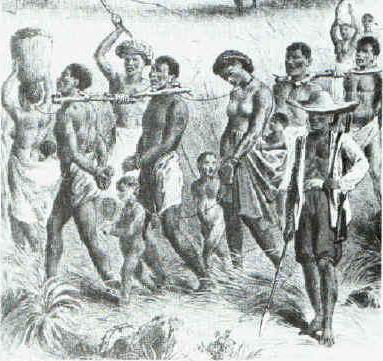
In this exhibit Dr. Alexander Falconbridge describes what he saw and heard about how slaves were captured inland and sold on the coast to slave traders.
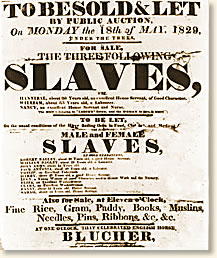
In early March 1859 an enormous slave action took place at the Race Course three miles outside Savannah, Georgia. Four hundred thirty-six slaves were to be put on the auction block including men, women, children and infants. Word of the sale had spread through the South for weeks, drawing potential buyers from North and South Carolina, Virginia, Georgia, Alabama and Louisiana. All of Savannah’s available hotel rooms and any other lodging spaces were quickly appropriated by the influx of visitors. In the days running up to the auction, daily excursions were made from the city to the Race Course to inspect, evaluate and determine an appropriate bid for the human merchandise on display.
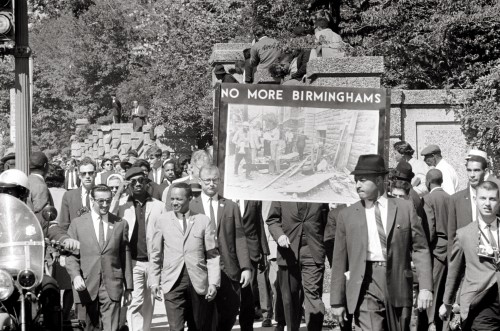
Why didn’t the Civil Rights Movement end racism in America? The social movements of the 1960s achieved some important changes for civil rights, women’s rights, and the environment. However, not everyone agreed with these changes. During the 1970s and 1980s, opponents started a movement of their own. Their goal was to overturn the gains of the 1960s.
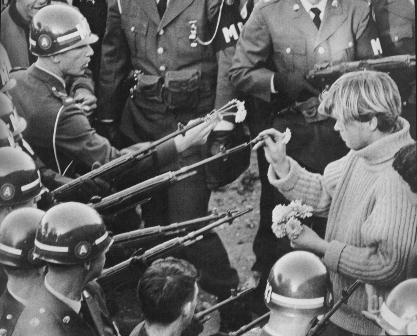
The 1960s saw an upsurge in civil rights and other organizations promoting freedom and equality for blacks and women. The 1970s brought a backlash against those movements by well-funded and well-placed organizations of the Right seeking more freedom for corporations and a return to traditional roles for women. In the 1980’s, hip-hop and punk rock music expressed anger at “The Power” through their lyrics instead of through actions to change laws.
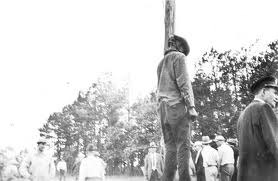
In 1927, a frenzied white mob in Little Rock, Arkansas, was focused on revenge. A little white girl had been murdered and they wanted to lynch whoever did it. When they grabbed a black man, they knew he wasn’t the killer. Still, they thought he’d done something else that made them mad. John Carter was their scapegoat: he paid the price for something he didn’t do.
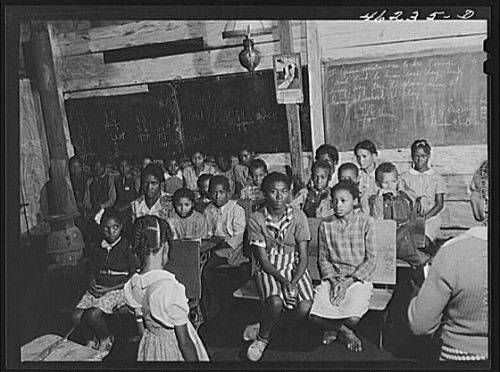
Education is the key to economic success. It is true now, and it was true in the Jim Crow South. Southern education was not very good – even for white children. But education for blacks in the South in the early 1900s was worse in many ways. In this exhibit you can learn what school was like for most African American children in the South – and why.
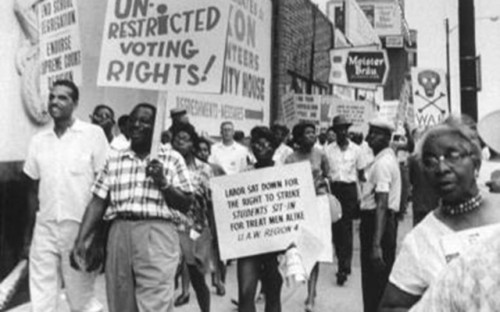
From about 1900 to 1965, most African Americans were not allowed to vote in the South. White people in power used many methods to keep black people from voting. Some of these methods also prevented poor white people from voting. Today there are still laws and customs that make it harder for African Americans, other minorities, and some whites to vote.
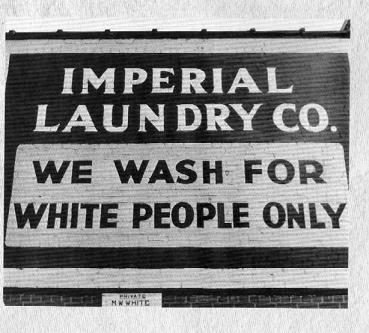
“Jim Crow” refers to a five-part system developed in the late 1800s and early 1900s to support white supremacy and oppress black citizens. Although there were laws that discriminated against African Americans throughout the country, the Jim Crow system existed only in the South. This exhibit briefly describes the five oppressions of the Jim Crow system.
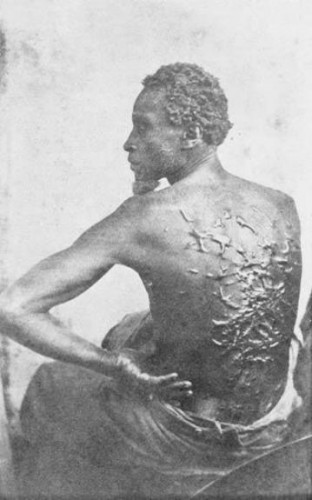
This famous photograph communicated a powerful message about the so-called “peculiar institution”—undermining the notion that slavery was benign.